Professor Harrison Weisinger on Substack → SUBSCRIBE

I love playing basketball.
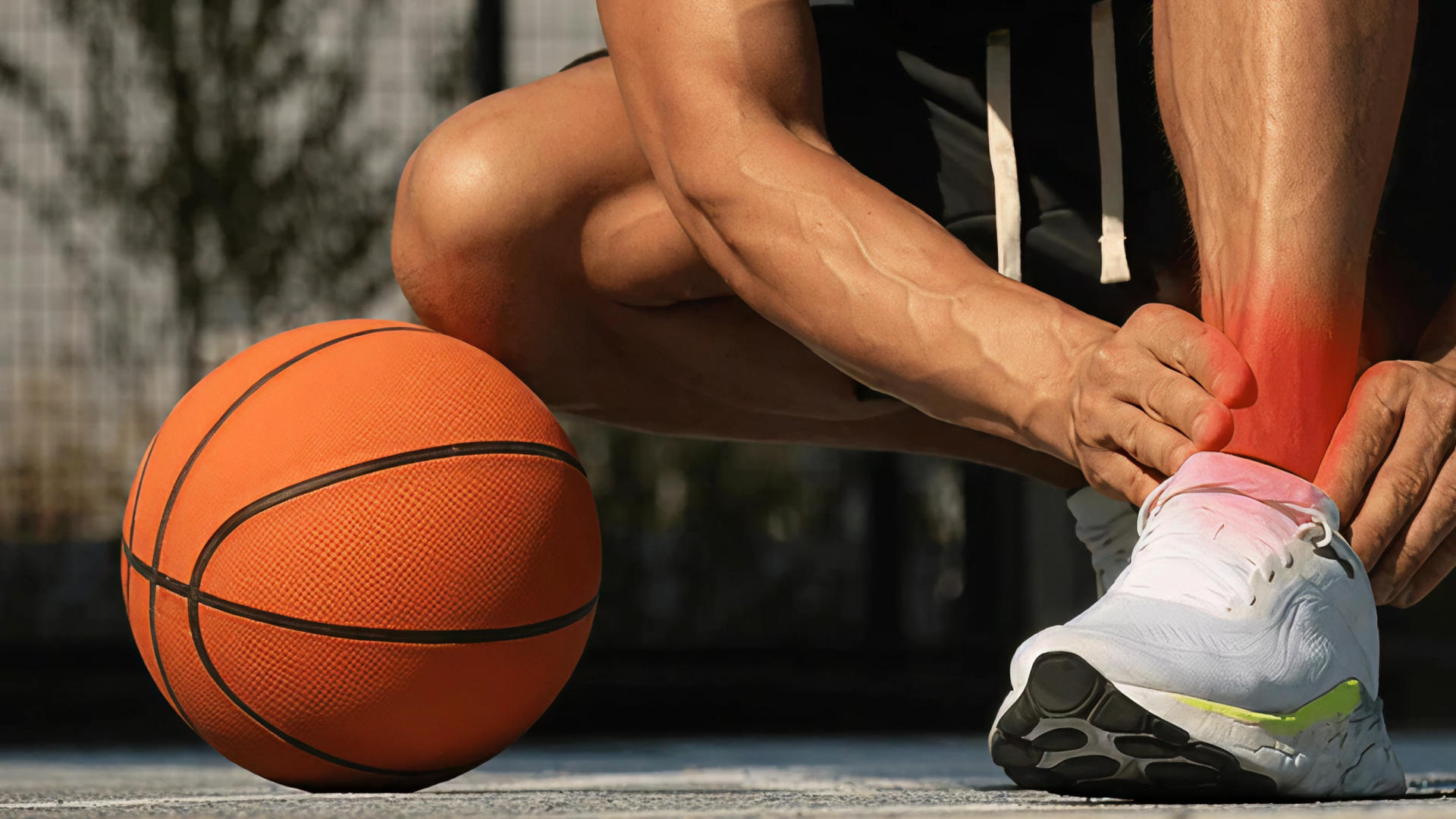
I’ve coached for years and even put a mini court in the backyard. Ten days ago, I ruptured my Achilles tendon playing basketball. Four days ago, I had it surgically repaired. I am writing this from the other side of the operating table, where the literature I have spent years reading suddenly became uncomfortably personal.
I learned that one can cycle 150 kilometres a week, lift three or four times, return to basketball after a 20-year break, get through four games, then rupture an Achilles in the fifth. I had even added some plyometric work in the months leading up to my return — box jumps, broad jumps, reactive calf work — but I had not prioritised it the way the evidence now tells me I should have. That is precisely why this injury infuriates sensible people. It feels like a betrayal by a body that had otherwise been keeping its side of the bargain, especially when you thought you were doing the right things.
The literature supports that frustration more than most people expect. Achilles rupture in midlife is often explained lazily, as though the tendon failed because someone lacked discipline, skipped a warm-up, or had simply become soft. The evidence points to a more specific problem. General fitness and tissue-specific readiness are related, but they are not the same thing. Basketball asks for repeated high-rate stretch-shortening, abrupt acceleration and deceleration, cutting, landing, and reactive push-off. Cycling and conventional resistance training build many valuable qualities. They do not automatically prepare the tendon-muscle unit for that exact elastic job. I learned this the hard way.
That distinction matters even more when the injury is incomplete rather than complete. The awkward truth is that evidence specific to incomplete or partial Achilles rupture is thin. We have much better data for complete acute rupture, for the trade-offs between surgery and non-operative care, and for rehabilitation principles than we do for intratendinous or high-grade partial tears. So this article can be confident in some places and should be more careful in others. Where the evidence is borrowed from complete ruptures, I will say so.
The epidemiology is not subtle. In a 25-year regional cohort of 524 Achilles ruptures, 67.04 percent occurred during sport, and incidence rose over time (Čretnik 2023). In a multicentre Chinese cohort of 379 cases, basketball was the leading sport context, with the highest rupture rates in the moderate-to-warm temperature bands and a clustering in spring, which probably reflects when people are most likely to expose themselves to explosive sport rather than some mystical seasonal curse (Zhou 2025). A basketball-specific systematic review found the same pattern: basketball keeps showing up, even though the literature is mostly descriptive and far thinner than it should be (Alegre 2021).
The practical translation is simple: aerobic engine and force capacity are both useful, but neither guarantees that the Achilles is ready to behave like a spring after a long layoff from court sport. If you have spent years riding and lifting, you may have rebuilt the chassis and the engine without fully rebuilding the suspension.
I had added plyometrics — box jumps, broad jumps, reactive calf work — but the volume and specificity were insufficient.
I treated explosive training as a supplement rather than a prerequisite. The tendon needed systematic, progressive exposure to repeated stretch-shortening cycles under basketball-specific loads: cutting off the dribble, landing from rebounds, accelerating out of defensive slides. I gave it some exposure. The literature suggests that was not enough, and my ruptured tendon confirmed it.
That is the part people often miss, especially active men in their 50s who have been doing many things well. They may be fit in ways that matter, and they may even be doing some of the right preparatory work, but not necessarily with the volume, frequency, or specificity that basketball demands. The tissue problem often sits in that gap.
For complete acute Achilles rupture, the clearest management signal is about rerupture, not magical restoration. In a 2023 meta-analysis of 13 randomised trials including 1465 patients, rerupture risk was lower with open repair than with conservative treatment, relative risk 0.27 [95% CI 0.10 to 0.62], and lower with minimally invasive repair than with conservative treatment, relative risk 0.14 [95% CI 0.01 to 0.88]. Open and minimally invasive repair did not meaningfully differ from each other for rerupture, relative risk 0.72 [95% CI 0.10 to 4.4] (Deng 2023). In plain English, surgery appears to buy more protection against the tendon going again than older conservative pathways did.
That is the attractive part of the story, and it is the bit people usually stop at. The harder part is function. In a large 856-patient cohort, treatment was not a significant predictor of Achilles Tendon Total Rupture Score once age, BMI, and sex were considered in the multivariable model (Larsson 2022). In the predefined secondary analysis from the Copenhagen Achilles Rupture Treatment Algorithm trial, one-year calf atrophy and tendon elongation remained common whether patients went down an algorithm-based pathway, a default surgical pathway, or a default nonsurgical pathway, with affected-limb calf atrophy in the order of 24 to 30 percent and no significant between-group differences (Barfod 2023).
When my friend the surgeon walked me through the decision tree four days post-rupture, this was the frame I found most useful: surgery is a bet on structural protection, not functional restoration. The trade I accepted was lower rerupture risk in exchange for months of disciplined rehabilitation with no guarantee of returning to my pre-injury jump capacity. That is a sobering result, and it is the frame every patient deserves: surgery is often a rational choice, but it is not a reset button and it does not guarantee a normal tendon, a normal calf, or a normal jump.
If there is one theme that survives almost every paper in this area, it is that rehabilitation quality is load-bearing. A 2022 meta-analysis of 20 randomised trials after operative Achilles rupture repair, covering 1007 patients, found no significant odds-ratio differences across the broad rehab groupings, but the most favourable overall pattern was early weight-bearing plus mobilisation (Massen 2022). That is the part many clinicians now find intuitive, because immobility has a cost and a recovering athlete needs progressive loading of the tendon, the calf, and the movement system as a whole.
But good rehabilitation is not the same thing as reckless acceleration. A 2024 meta-analysis of 43 randomised trials, including 2553 patients, reported an overall rerupture incidence of 3.15 percent [95% CI 2.26 to 4.17] after operative management, with immediate ankle active range of motion carrying a higher pooled rerupture estimate than waiting one to two weeks: 3.92 percent [95% CI 1.76 to 6.89] versus 2.45 percent [95% CI 1.25 to 4.03] (Wang 2024). The human translation is important. The tendon wants progression, not impatience.
Writing this ten days post-injury, with my leg elevated and in a cast that I’ll have for another couple of weeks before getting to use a boot. I am acutely aware that rehabilitation quality will determine whether I return to court sport or simply return to walking comfortably. The research is unambiguous on this point, and I have the uncommon advantage of understanding the evidence while living through the recovery.
The same theme appears in nonoperative rehabilitation. In a randomised trial of 40 patients with complete midsubstance ruptures treated nonsurgically, adding early tensile loading produced a larger tendon callus and lower elastic modulus at 19 weeks, but it did not improve the key one-year outcomes that matter to an athlete. Maximal heel-rise height at 52 weeks was still 32 to 33 percent below the uninjured side, and total heel-rise work remained under half of the uninjured side (Rendek 2022). That is what I mean when I say the tendon may be medically managed long before it is athletically restored.
Saarensilta’s prospective cohort helps explain why. In 86 surgically treated patients, more tendon elongation at 12 months predicted worse work symmetry at one year, while a larger early callus at six weeks predicted better later heel-rise symmetry (Saarensilta 2023). Tendon shape during healing maps to later performance, which is one reason rehabilitation cannot be treated as an afterthought.
This is where the article needs to slow down. The strongest paper in the present full-text set for partial Achilles rupture is a 2020 narrative review by Gatz and colleagues, and that fact matters (Gatz 2020). Their broad conclusion was that partial rupture remains under-studied and under-recognised. They describe a common first-line conservative pathway of a 2 cm heel lift for six weeks, no stretching for 12 weeks, then progressive loading during weeks 7 to 12. Surgery enters the discussion more often when symptoms persist, single-leg heel-rise function remains poor, or structural involvement is larger, for example involving more than half the tendon cross-sectional area (Gatz 2020).
That is useful, but it is not the sort of evidence base that allows false precision, because it is closer to a pencil sketch than a blueprint.
The adjacent evidence for myotendinous ruptures is also modest. A 2025 systematic review by Lameire and colleagues identified 70 patients across five studies, with 67 managed nonoperatively. Reported outcomes were generally favourable, with all reported patients able to perform a single heel raise and return to work or sport (Lameire 2025). Again, useful, but small, nonrandomised, and anatomically adjacent rather than identical to a high-grade partial midsubstance rupture.
So if you have an incomplete rupture and your surgeon recommends surgery, or does not, the literature does not give a clean algorithm that settles the argument. Tear morphology, symptoms, function, and clinical judgement all matter, and that uncertainty is real. I would rather state it plainly than camouflage it with pseudo-certainty.
Patients often want one date, but the evidence offers a sequence instead. Walking comfortably, returning to gym work, and resuming running are milestones, but cutting, landing, and surviving repeated basketball possessions sit in a different category altogether. That matters because many active adults mistake the return of ordinary competence for the return of court-sport capacity.
Even the elite data are sobering. In a descriptive study of 37 NBA players with Achilles rupture, 78.38 percent returned to play, 22 percent never returned, and only 27.03 percent returned to their prior level of success (Meadows 2024). That is not a direct template for a man in his 50s, but it is a useful ceiling-case warning. If even fully resourced professionals struggle to get back to prior level, middle-aged recreational athletes should expect a slower and less linear road than their impatience would prefer.
The mind matters as well. In a prospective cohort study, Slagers and colleagues found that low motivation, low readiness to return to sport, and high kinesiophobia at six months flagged patients more likely to struggle later (Slagers 2021). That is not an argument to psychologise every setback. It is a reminder that healed tissue and sporting readiness are related but separate problems.
If you want the preservation message in one line, here it is: if you plan to play a spring-loaded court sport in your 50s, you need at least some spring-loaded preparation.
That probably means graded re-exposure to jumping, landing, acceleration, deceleration, and court sessions — not simply more cycling volume or another block of generic gym work. The full-text literature does not give us the perfect return-to-basketball progression for masters athletes, which is frustrating, but the inference is clinically sensible because basketball keeps showing up as the exposure setting while persistent deficits in heel-rise performance, calf volume, and tendon behaviour keep showing up after injury.
It also means taking tendon symptoms seriously before catastrophe. Partial ruptures sit on a tendinopathy spectrum more often than people like to admit (Gatz 2020). Medication history matters too. Fluoroquinolone exposure, especially ofloxacin in the 2024 molecule-stratified meta-analysis, carried measurable Achilles complication risk, and this belongs on the checklist when reviewing rupture vulnerability (Sangiorgio 2024).
Warm-up still matters, but it is not the whole story. Reducing a midlife Achilles rupture to one bad warm-up is tidy, while the stronger explanation is background tendon quality plus a sudden reintroduction to a movement ecology that the tendon had not rehearsed recently enough.
This injury has given me a research question I cannot ignore: what is the minimum effective dose of plyometric and reactive training that adequately prepares a masters athlete’s Achilles for return to court sport after a multi-year layoff?
The literature does not answer this cleanly, which means I will be constructing my own return-to-basketball progression from first principles and whatever evidence exists for tendon adaptation, rate of force development, and eccentric loading capacity in older athletes. I will be documenting that process — both because I need the discipline of structured progression and because the evidence gap is large enough that case studies from informed practitioners may genuinely help others.
The short version: I had plyometrics in my program, but I had not built the progressive, multi-month foundation the tissue apparently required. Next time — assuming there is a next time — I will treat reactive training as foundational, not supplemental, and I will measure readiness with single-leg hop distance, reactive strength index, and eccentric calf strength symmetry before stepping back onto a court. I will be writing about that process here.
The biggest practical gap is which graded return-to-running and return-to-jumping progression best restores spring-like court-sport capacity in masters athletes, especially after incomplete rupture. The present full-text literature still does not answer that well.
So the sensible conclusion is a measured one, informed now by both the literature and lived experience. A fit man in his 50s can rupture an Achilles returning to basketball without being lazy, foolish, or broadly untrained, because general fitness is not the same as basketball readiness. I was that fit man — cycling and lifting religiously, with some plyometric work in the mix — and the tendon still failed. The volume, specificity, and progressive overload were insufficient.
Surgery may reduce rerupture risk more consistently than it restores normal function, rehabilitation quality matters at least as much as the binary label of surgery versus conservative care, and incomplete rupture deserves particular humility because the evidence remains thin. I will be discovering over the coming months whether the decisions I have made — and the rehabilitation discipline I bring to this recovery — prove sufficient to return me to the court that taught me this lesson. And when I do return, the preparation will look very different. I will be writing about that too.


For all media enquiries, please contact press@myperformancedoctor.com
