Professor Harrison Weisinger on Substack → SUBSCRIBE

I Won a National Championship at 50. Then I Realised I Was Training Like an Idiot.
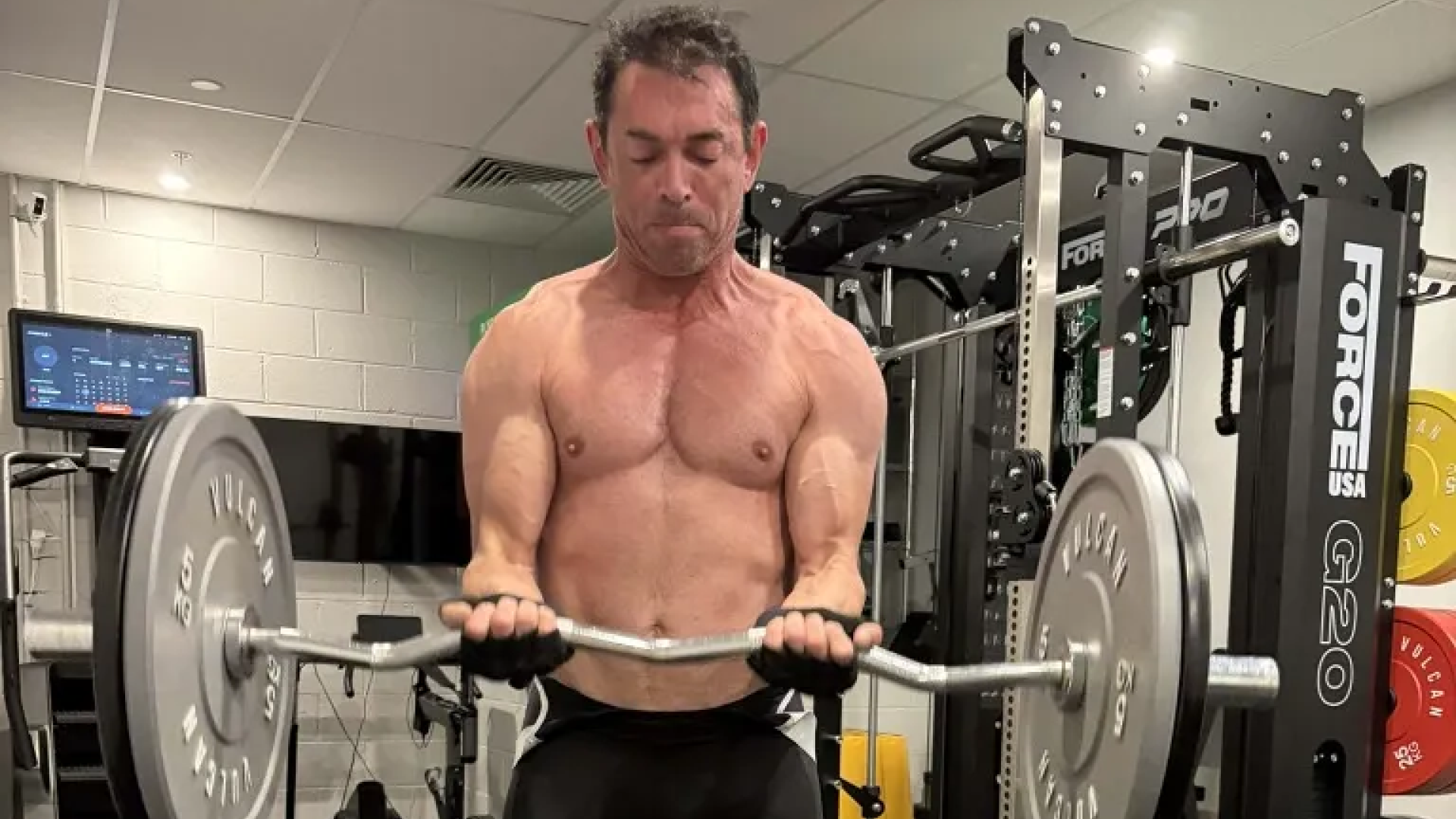
In 2021, I won the National Masters Championship in the Team Time Trial. That same season, I finished the Melbourne to Warrnambool — 267 kilometres of National Road Series racing, some of the most unforgiving road in Australia. I came in just 38 minutes behind the winner, an elite cyclist in his twenties. At 50, that felt good.
My FTP at the time — functional threshold power, the maximum wattage you can sustain for an hour — was 304 watts. Last month I tested at 230. I'd lost 74 watts over a few years, and most of that loss came from the same mistake most amateur endurance athletes make: riding in the junk zone. Too hard to recover from, too easy to adapt to. The metabolic equivalent of treading water, thinking that you're swimming.
I'm a doctor. I have a feel for what age-related physiological decline looks like, and 74 watts in that timeframe is too fast. I had taken over my own program and the decline was a programming problem. My training was wrong.
I've worked with coaches before, really good ones. The issue is scope. A powerlifting coach programs like a powerlifting coach. An endurance coach builds for the aerobic system and bolts on token strength work. A physio manages the injury and ignores the performance goals. Nobody integrates periodisation science with endurance physiology with motor learning with pain neuroscience with the specific demands of a 55-year-old who needs to rebuild his FTP, has returned to basketball after a 20-year absence, needs to build muscle for longevity, has a cranky shoulder, and do all of it inside a medical history that would make most coaches reach for a liability waiver.
So I built a system instead.
I read — or in some cases, re-read — 27 books. A curated canon representing the best current thinking across every domain that touches human physical performance. Then I built an AI coaching system trained on all of it, with my medical experience and philosophy baked in, integrated into one coherent intelligence. Twenty-seven books is the minimum when you don't live in one domain and your body doesn't either.
I should say something here, because it's relevant to how the system thinks.
I've had a coronary stent, a hip replacement, and Crohn's disease since I was 18. I mention this because it shapes how I think about my body. When you've had hardware fail on you, you stop treating maintenance as optional. You apply the same rigour you'd apply to any complex system that has already shown it can break.
The system I built knows all of this. It treats these conditions as constraints within which high performance is still the goal, which is exactly how I've treated them for 37 years.
Here's what makes this different from every other AI fitness tool marketed on Instagram: you can feel the authors in the room. Every one of those 27 books left a fingerprint on my program, and I experience them in every session.
Before anything starts: five minutes of nasal breathing. That's James Nestor. Slow, deliberate, diaphragmatic. It downregulates the sympathetic nervous system and draws a hard line between whatever my day has been and what the next 75 minutes require. Nothing begins until those five minutes are done.
Before the first working set: a three-second outcome image. That's Gallwey. Not a technique checklist — the body already knows the movement. What the conscious mind provides is a destination, not an instruction manual. Three seconds seeing the completed rep, then go. If you've played a sport at a reasonable level, you know this feeling. It's motor priming.
The last two hard reps: the governor cue. This one changed how I train. It comes from Alex Hutchinson's work on the central governor model — the idea that fatigue is largely a protective signal from the brain, not a damage report from the muscles. When I'm on rep 9 of 10 and everything is screaming stop, the cue is: the last two reps are your governor signalling quit, not actual failure. Your muscles have more. Your brain is voting to stop early, the way it always does. Knowing that changes how you respond to the sensation.
After every session: three wins. Three things that went right. That's Bob Rotella, straight from his work with elite golfers — what you reinforce is what you repeat. "Hip thrust felt strong at 120kg. Shoulder had zero pain on cable press. Breathing protocol settled the pre-session anxiety." Done.
A reasonable question: why not just follow one program?
Because Verkhoshansky's periodisation principles shape the mesocycle structure. Israetel's volume landmarks determine the dose. Starrett and Kolar inform the mobility work. Maffetone's aerobic thresholds protect the endurance base from interference. Fitzgerald and Friel provide competing but complementary models for rebuilding what the junk zone destroyed. Rotella and Gallwey shape the psychological architecture embedded in every session. Aschwanden's ruthless evidence filter strips out everything that doesn't actually work.
No single human coach integrates that many inputs in real time. The cognitive load is too high. A system built specifically for synthesis — one that holds all 27 authors simultaneously and resolves their tensions into a coherent daily prescription — can.
I've spent 30 years looking after patients. The longer I practise, the more convinced I become that the categories we've built — medicine over here, performance over there, technology somewhere else — are administrative fictions. The body doesn't respect them. Your cardiovascular risk profile affects your training. Your training affects your metabolic health. Your psychology affects your recovery. Your recovery determines whether tomorrow's session builds you up or breaks you down. It's one system, and it needs to be treated as one system.
At My Performance Doctor, my wonderful colleagues and I do that. And what I've built for myself — specialist-grade programming drawn from the full depth of training science, individualised to my physiology, my goals, my constraints — is being built into the MPD platform. Every patient gets access to this depth. Not a generic PDF and not a template, but a system that knows your history, respects your complexity, and still demands your best.
I tested it on myself first because that's how I've always worked. If I'm not willing to do it, I'm not willing to recommend it. The 74 watts I'm chasing back will tell me whether the system works as well as I think it does. A body with a complicated history still responds to intelligent demand. The question is whether the demand is actually intelligent, and for most of us, for most of our training lives, it hasn't been.



For all media enquiries, please contact press@myperformancedoctor.com
